
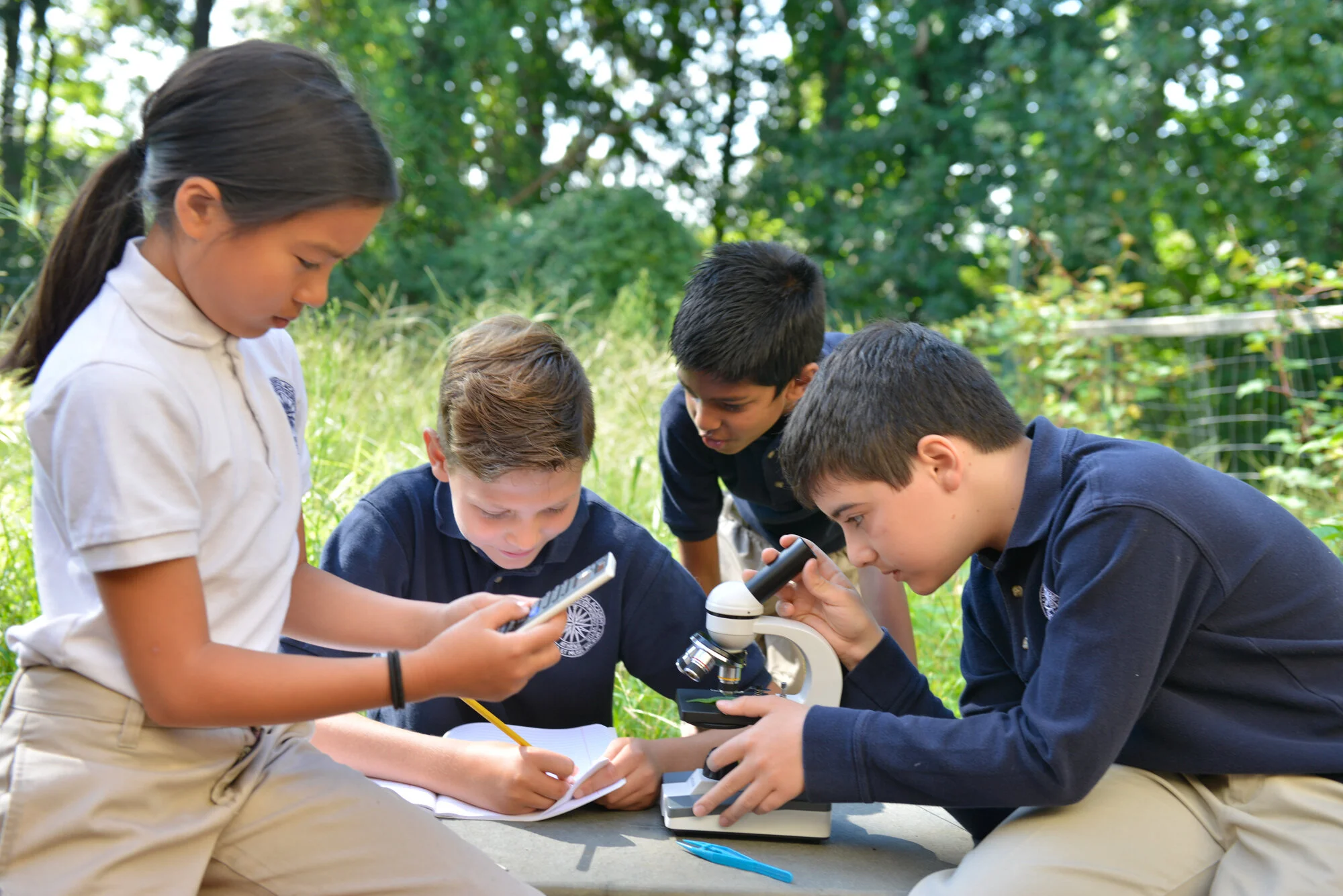
LOWER SCHOOL
Because children are never too young to learn great things.
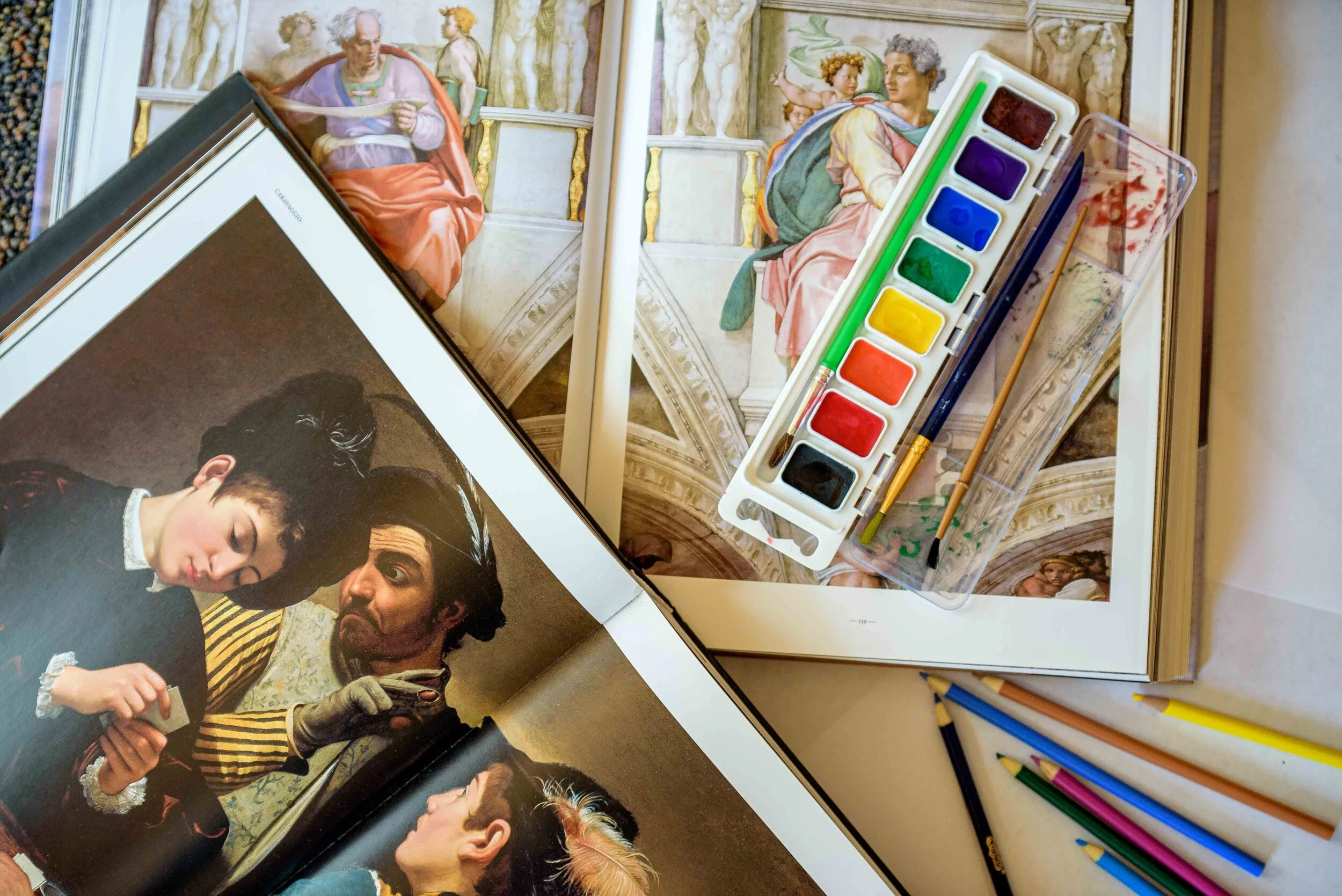
The full array of MLCA Lower School subjects is divided into five curricular divisions. Students attend classes between two and five times a week, depending on the subject.
English Literature & Language
English Literature
English Language
The Good Life
History & Geography
History
Geography
Languages: Ancient and Modern
Hebrew (elective)
Latin
French
Arts & Music
Art Studio
Art History
Music Theory
Violin Ensemble
Individual Piano Lessons
STEM
Math
Science
Computer Programming
UPPER SCHOOL
A voyage of the intellect across epochs and continents.
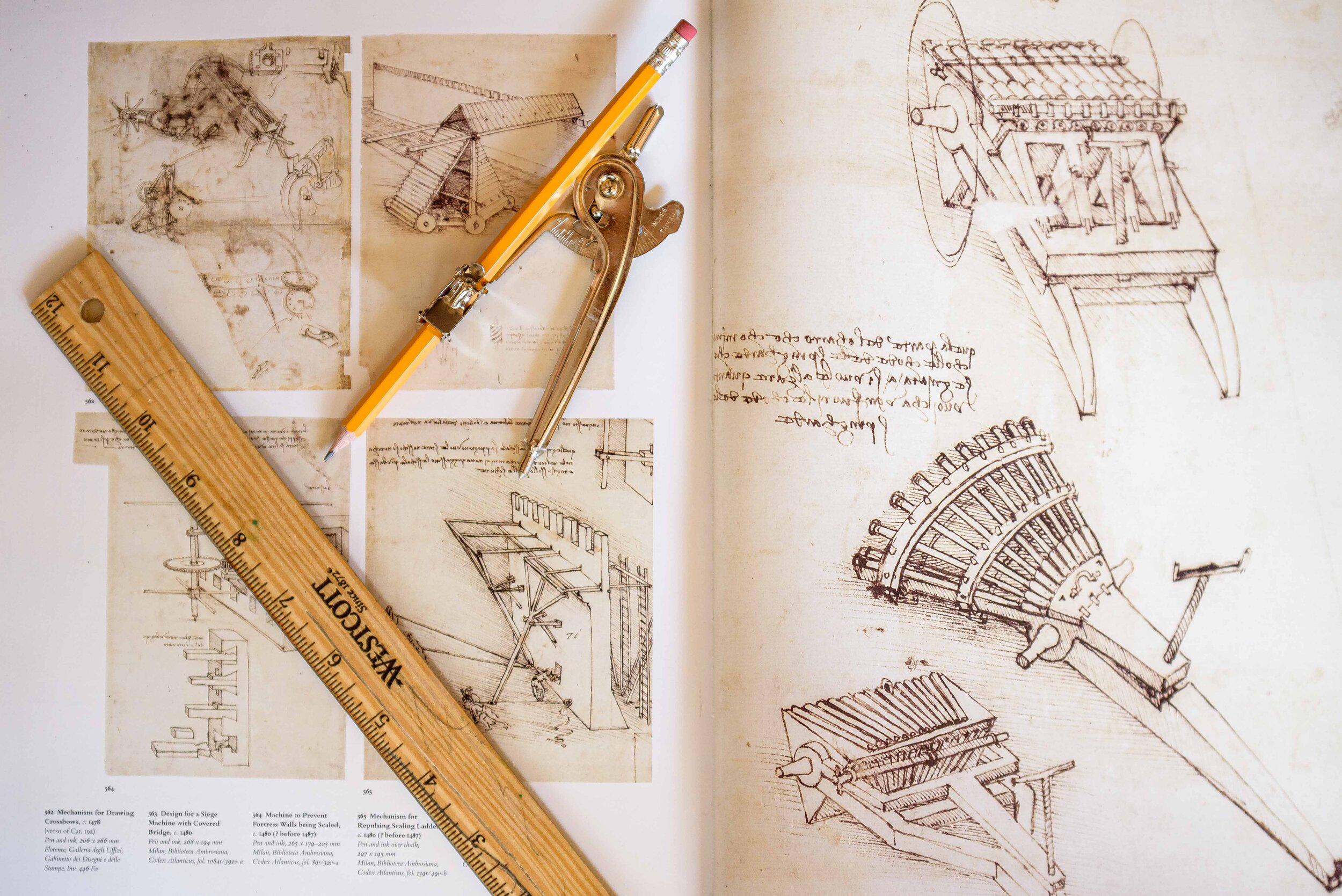
All Upper School students study six core academic subjects: English, History, French, Latin, Math, and Science. Each core class meets in hour-long blocks.
Beginning in Upper School, our classes shift in many subjects to a seminar-style format, in which class time is used for discussion and analysis rather than direct instruction. This means that real preparation — reading, translation, and written work — happens at home, so that students arrive ready to engage. In the humanities, this includes substantial reading in the original French and Latin, alongside English texts.
Students are not asked to take this on without preparation. Careful reading habits, sustained language study, and growing independence in written work are built deliberately at every stage of a student's time at MLCA, whether a student has been here since kindergarten or joins later, so that by the time a student reaches the seminar classroom in Upper School, sustained outside preparation feels like a natural extension of skills already in practice, not a sudden leap.
Electives
Electives offer students the opportunity to pursue an array of academic interests that are not encompassed in the core program, including the arts, as well as deeper engagement in math, science, programming, and foreign languages. They also provide students with the guidance necessary for them to compete in widely-recognized competitions in areas including French, science, math, and robotics. The overwhelming majority of Upper School students opt to participate in the electives courses. While these classes are optional, students who choose to enroll in them are expected to make a serious commitment. Electives are included in student report cards.