
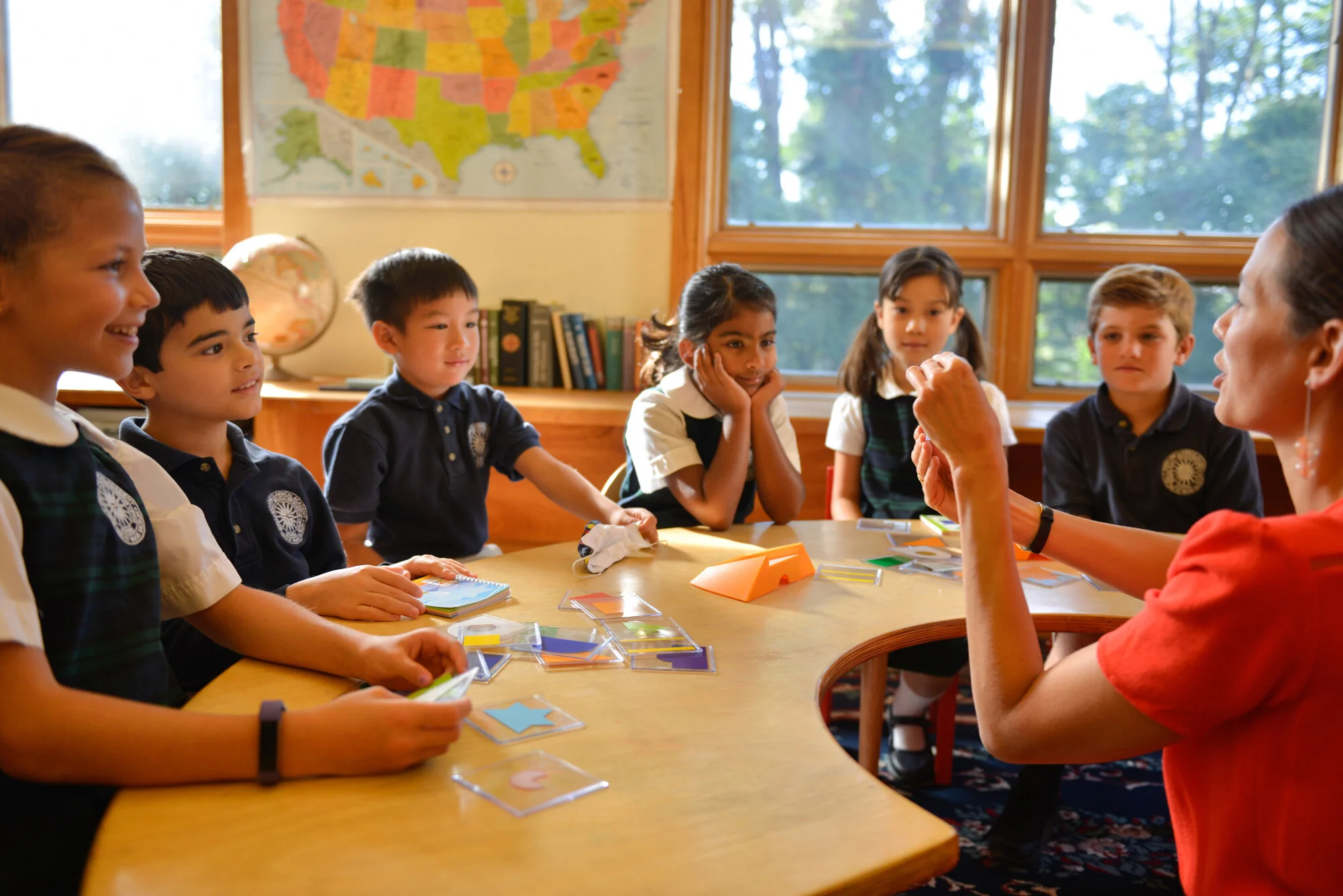
LEARNING, UNABRIDGED.
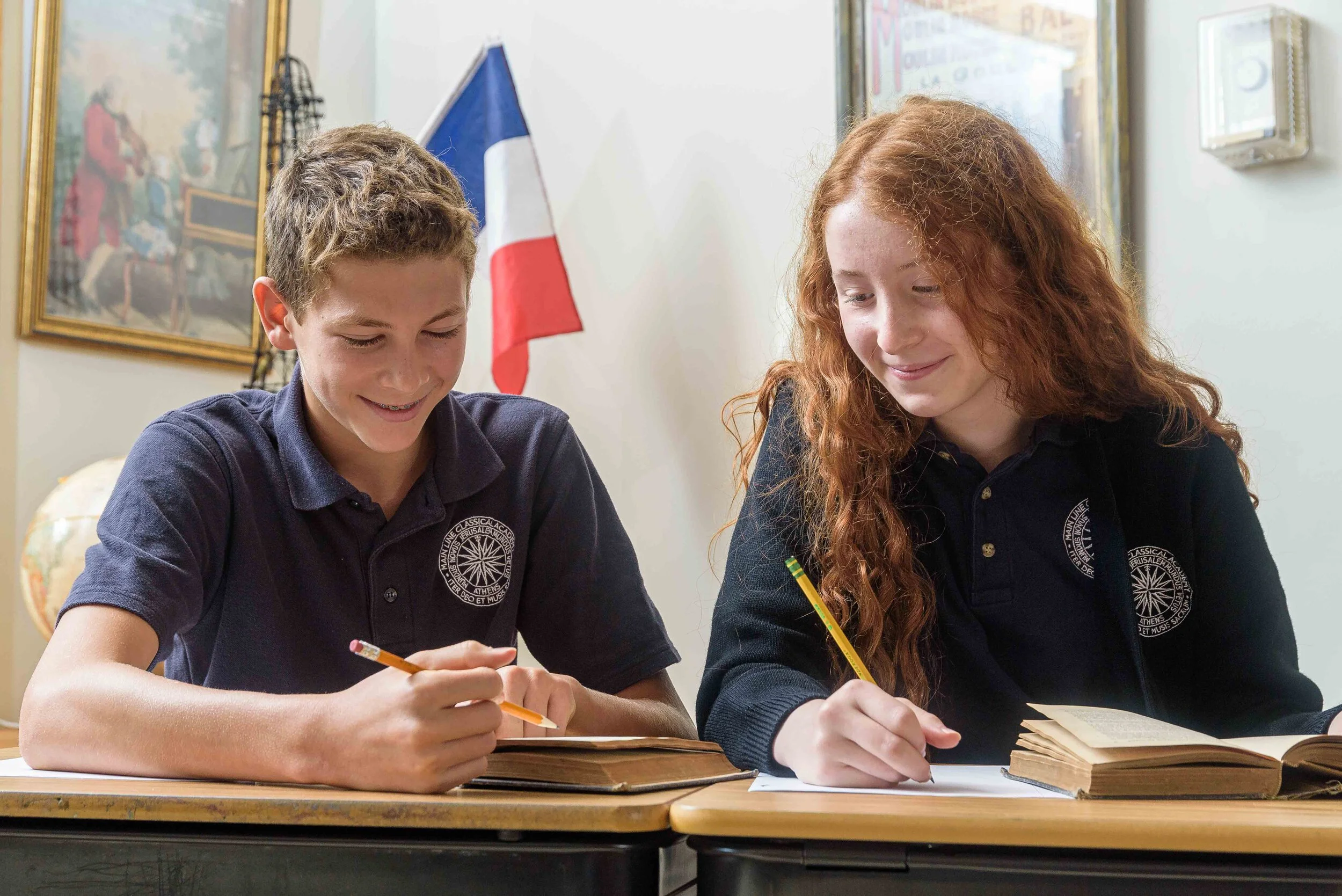
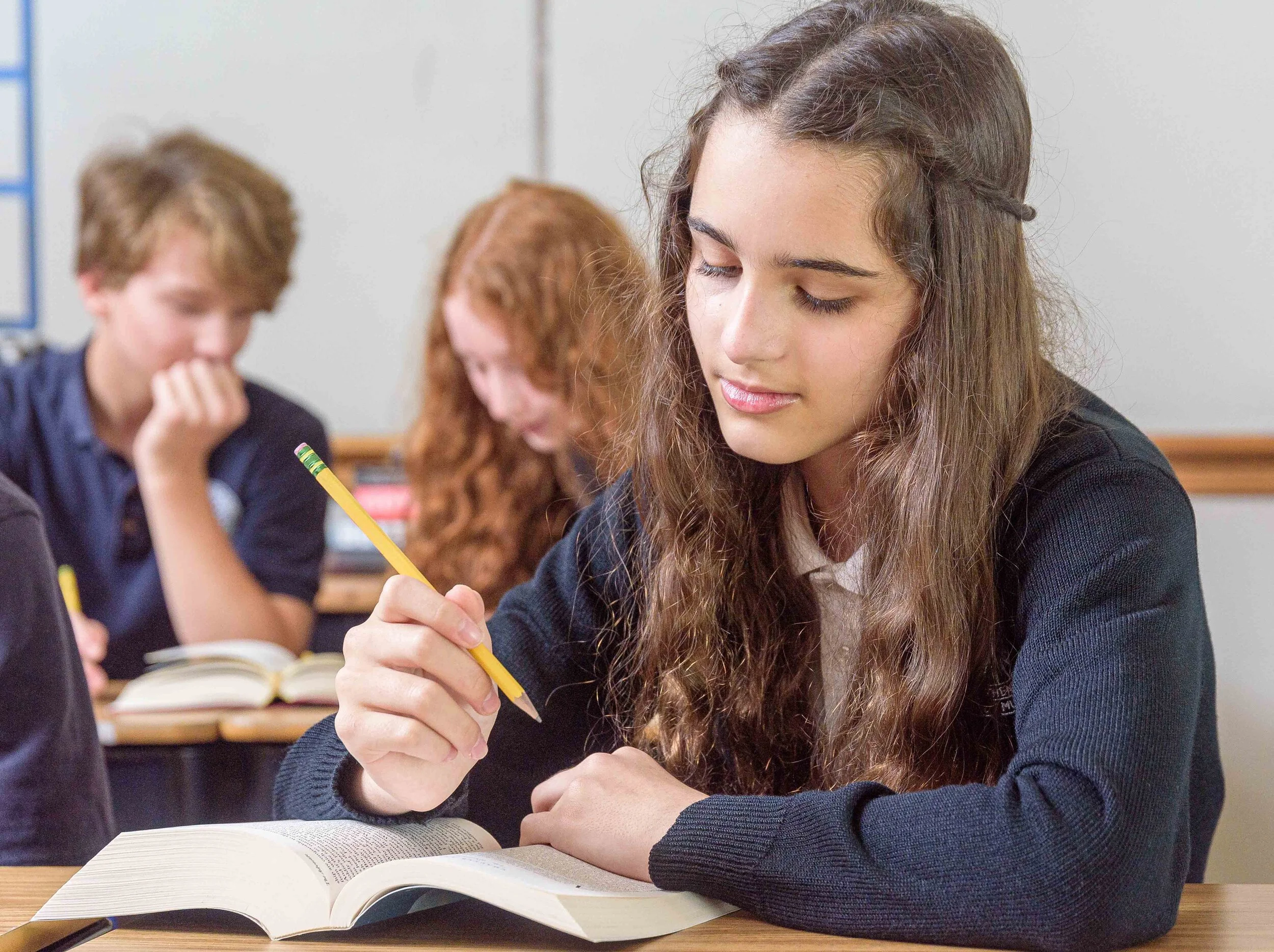
We believe that children deserve to be introduced to the best — the most profound, exciting, thought-provoking, character-building, eloquent, and adventuresome — works of Western literature and episodes of history.
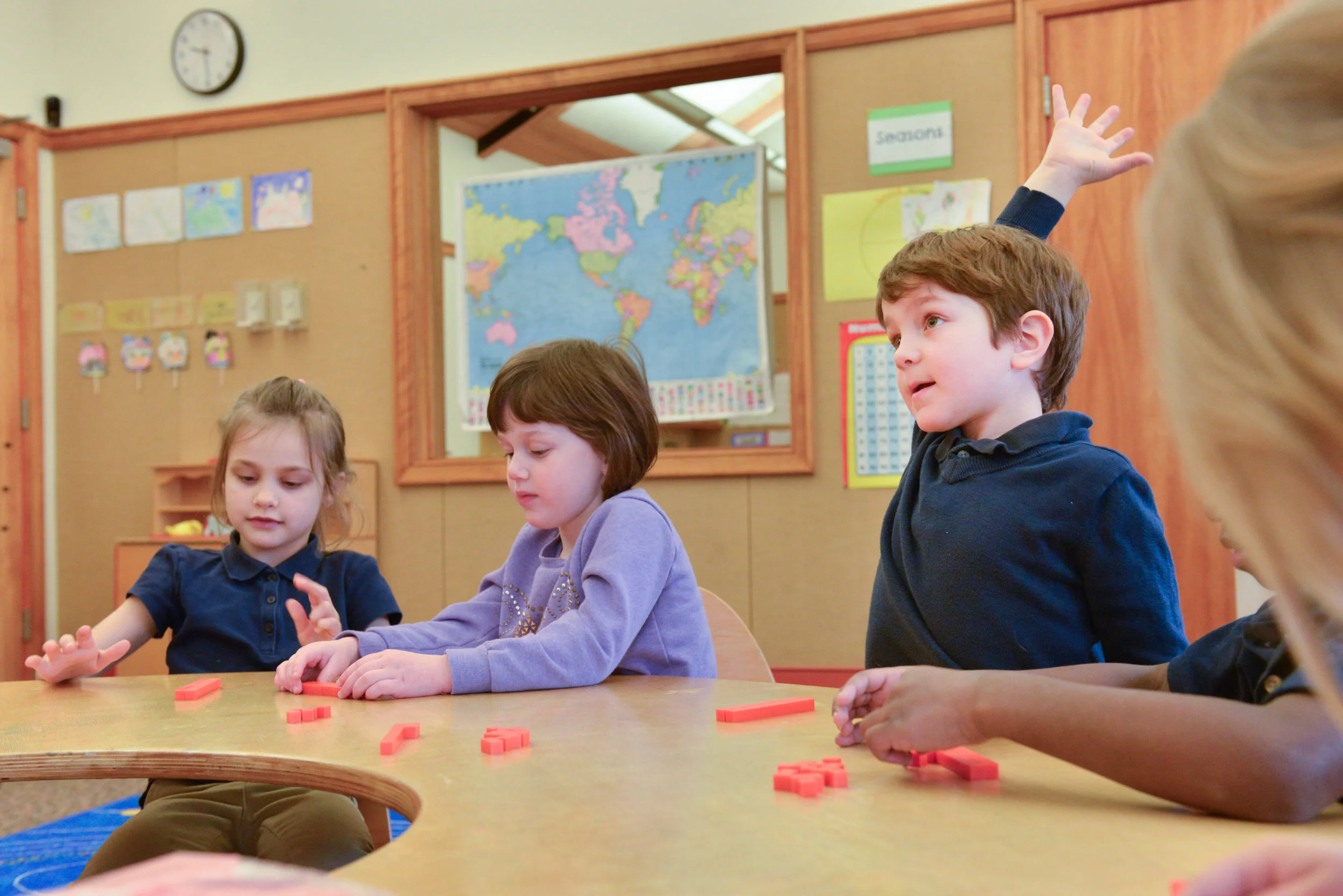
Mathematicians describe mathematics with words such as beautiful, elegant, exciting, joyful. We instill this attitude in our students, while offering a deeper scope and sequence than comparable private schools.
Rigorous study of one modern language (French) and one ancient (Latin) is a staple of our curriculum. In addition, the Main Line Classical Academy offers optional immersive Modern Hebrew language instruction.
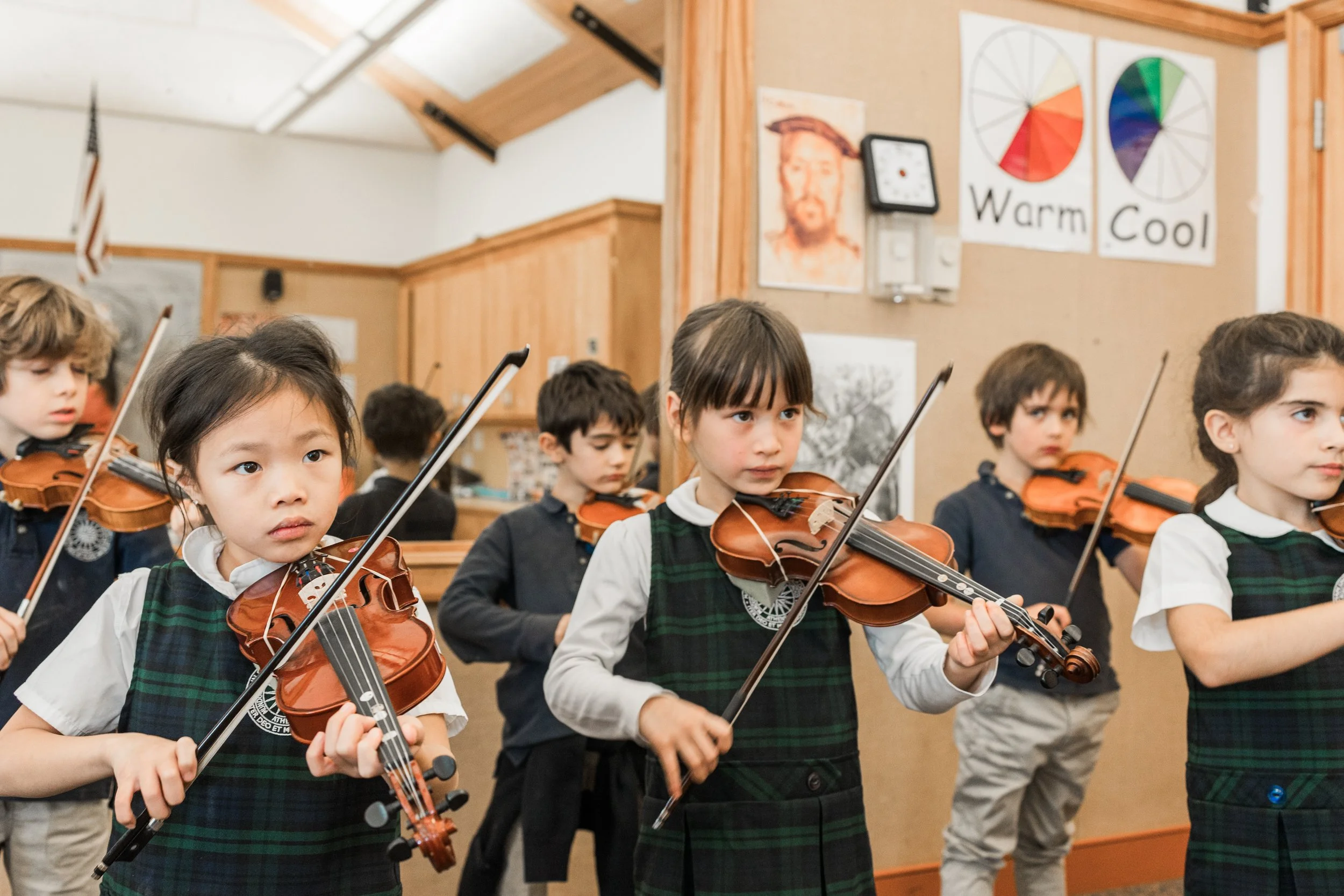
Art Studio and Art History classes are staples of the Main Line Classical Academy curriculum. Our students' hands-on work is enriched by lessons about culture and aesthetics throughout numerous historical epochs.
The Classical Education
Our curriculum and our teaching methods are designed to guide students along a journey both joyful and rigorous. We believe that what students learn matters and is not merely incidental to the acquisition of a set of skills.
WHAT IS
Classical Education?
Classical education, also sometimes referred to as liberal education (from the Latin liber, free), is defined by the belief that a mature adult -- free intellectually, personally, and politically -- is the product of a course of study grounded in the classical canon of Western literature, mathematics, arts, and sciences. This canon is rooted in two mighty traditions: the Greco-Roman and the Judeo-Christian. Thus, in order to develop true love and mastery of the classical canon, students must come to understand the historical development and the religious and cultural underpinnings of these two traditions, as well as the fruitful and sometimes tense interactions that occurred between them through the centuries, particularly through the medieval and early modern periods in Europe. It is out of that crucible that the North American experience emerged.
In immersing students in this exploration, classical education takes them on a journey through history. Just as an individual's personal identity is contingent on his or her memory, so too cultural identity is contingent on thorough historical knowledge.
Inasmuch as time travel across epochs and cultures is seminal for classical education, so too is the study of languages. The Western classical tradition has long looked to Latin, ancient Greek, and Hebrew as its three sacred tongues. At MLCA, this heritage takes shape through a required course of study in Latin and French, beginning in fourth grade and kindergarten respectively, with ancient Greek and modern Hebrew available as electives for students who wish to pursue them further. And just as vital is a deep understanding of Mathematics, Music, and Computer Science as languages in their own right -- languages with logic and aesthetics, which, once mastered, allow us endless degrees of still other forms of freedom.
Classical education sees skills-development not as a goal in its own right but as a prerequisite for mastering the classical canon and the ideals of Truth, Goodness, and Beauty that underlie its seminal works. The ultimate product of classical education is a young person who has attained some of the wisdom, refinement, and discipline necessary to think and act as the mature citizen of a free country—a citizen who holds himself responsible for upholding the intellectual and cultural origins of this freedom.
Laden with this knowledge, he steps into the future not to adapt to its anticipated demands, but to shape and determine them.